Showing posts with label Books. Show all posts

Tuesday, November 20, 2012

Ideal Bookshelf


I heard about a book called "Ideal Bookshelf" that took book lists from a hundred or so notable figures, and created a print of those books. The books are ones that changed your life, that defined who you are, that you read again and again. I thought I would put together my own list and add to it as I thought of more. Most of mine I read when I was younger, but they all have a special place in my heart for various reasons. You can learn more at: idealbookshelf.com

  • A Wrinkle in Time by Madeline L'Engle
  • Ender's Game by Orson Scott Card
  • The Giver by Lois Lowry
  • Flowers for Algernon by Daniel Keyes
  • The Little Prince by Antoine de Saint-Exupéry
  • Bridge to Terabithia by Katherine Paterson
  • Hyperion by Dan Simmons
  • Tuck Everlasting by Natalie Babbitt
  • The Hero with a Thousand Faces by Joseph Campbell
  • Byzantium by Stephen Lawhead
  • Mythology by Edith Hamilton

Wednesday, July 25, 2012

Trailer: "Life of Pi"


I haven't had a chance to read the book yet, so I'll have to get to it by November. Oh, and if the tiger dies, I will be SO upset....


Friday, July 13, 2012

Hot man with puppies.


I mourn you already, Robb.

Thursday, July 5, 2012

Wednesday, April 25, 2012

What kind of drafter are you?

After finishing Brent Weeks' "Night Angel" trilogy, I picked up his newest book called "The Black Prism". The magic system is really interesting. When I saw this quiz, I figured I'd take it just for funsies.

I'm a blue magic drafter!

Take the quiz at Brent Weeks.com

Sunday, November 20, 2011

Tuesday, October 25, 2011

Thursday, October 13, 2011

Review: "Unholy Ghosts"

One of the things that I really love about my Kindle is getting to try out new authors and novels for such cheap prices. For instance, I bought Cherie Priest's "Boneshaker" for $3. Even better is "Unholy Ghosts", which I looked for after seeing high praise for it on one of the websites I read religiously. Low and behold it was 99 cents! So I yanked it up. I'm always pleased to try out new dark urban fantasy authors, it's sort of a guilty pleasure of mine. My only regulars are Kim Harrison's "The Hollows" series and more recently, Jim Butcher's "Dresden Files". On to "Unholy Ghosts" itself....


As I mentioned earlier, I'm not familiar with Stacia Kane's work. I have to say though, this first novel in her Downside series left me quite impressed. I found it to be very inventive and compelling. The world is a little different from our own. In 1997, the Earth became overrun with ghosts and almost didn't survive the invasion. The Church of Truth was the only one able to defend the people, thus killing off all of the old religions. Imagine knowing there is no God. There is only Fact and Truth. Magic exists, but only employees of the church are allowed to use these magical rites. Now the world is ruled absolutely by this church. Our heroine is Chess Putnam, a Debunker for the Church of Truth. It is her job to see if people claiming to be haunted are telling the truth, and if they are, to banish the ghosts.

However, our heroine has a problem. A big problem. She's secretly a drug addict. At first I thought I was going to have a real problem with this, because I'm very much anti-drugs and Chess is pretty much all about them. However thanks to Kane's writing, I still found her very likable and even relatable. Props, Ms. Kane.Chess has had a very difficult life. She doesn't remember her parents and was brought up by the social system. Chess has a lot of strength but her Achilles heel is definitely her affinity for drugs. This is where I hope to see growth from her in subsequent novels. Most of her motivations come from this need for drugs. Her relationships are primarily drawn around how people can be of use to her, whether for drugs or other things.  She now lives in the Downside, a part of Triumph city filled with drug dealers, pimps, and gangs. What's interesting is the slang they use, it's so distinctive that you can usually tell exactly who is speaking with no other indications.

Back to the plot: now she's in deep trouble with her dealer, Bump. She is in serious debt to him and he wants his payment now. They strike a deal that Chess has to get rid of the nasty ghosts at an abandoned airstrip so he can pursue operations there, and her debt will be paid. So Chess has to team up with Terrible, Bump's hired muscle. I'll tell you right now, I love his character. Love it. At first he seems to be a flat character but over time, you really get to see who he is and how he got that way. What seems to be a relatively simple task for Bump becomes increasingly complicated and dangerous. She stumbles into a number of things: black magic, a sexy rival drug enforcer, human sacrifice, and corruption within the Church. A lot of the book reads like a creepy mystery novel, with a little bit of romance thrown in. One of the things I especially liked was that magic takes TIME here. It's not like you have a wand and BAM! Fireball an enemy. It takes time, precaution and preparation. As a consequence, when you have a bunch of baddies after you, it's a lot more suspenseful. I don't want to give away much more of the plot, I'll just say it's quite fast paced. As a warning though, there were some graphic scenes that sort of grossed me out.

"Unholy Ghosts" is a fast-paced read in an inventive world, I highly recommend it.

Sunday, July 17, 2011

Review: "House of Discarded Dreams"


Here's a synopsis I  blatantly ripped from the back of the book:

 "A young college student, Vimbai, moves into a dilapidated house in the dunes and discovers that one of her new roommates has a pocket universe instead of hair, there's a psychic energy baby living in the telephone wires, and her dead Zimbabwean grandmother is now doing dishes in the kitchen. Strange things start moving under the porch, as the house continues to grow and mutate, and creatures from African urban legends all but take it over. Now Vimbai has to find a way back to the real world, even if it means coming to terms with her past....the past that only exists in discarded dreams."

My first glance at the cover really struck me because of its simplicity. The synopsis even more so. This was fantasy done in a very unique way. I'm surprised I hadn't heard more of Sedia before this. It's a complicated coming-of-age story where the protagonist does NOT leave fantasy behind! Instead, Vimbai has to learn to embrace the fact that dreams are just as important as any empirical research.

Let me explain the novel a little more in-depth. Vimbai is an undergraduate biology major living in New Jersey with her two immigrant parents, from whom she is trying to separate. She is especially trying to separate from her mother, a professor of African studies and is obsessed with social liberation except for when it comes to Vimbai. Vimbai grew up in a childhood steeped in Zimbabwean politics but would much rather be studying horseshoe crabs than learning about her family's traditions. So, she moves into a dilapidated old house on the beach with two twenty-something aged slacker roommates.

However, these slackers have much bigger problems than going out on Saturday nights or Facebook drama. Zach has a portal to another universe in his hair while Maya has a brood of possum-dog creatures that follow her around everywhere. Oh, and then they find a creature composed of congealed psychic energy in their telephone line. And THEN Vimbai's dead grandmother ends up making them breakfast in the kitchen. And then the house floats out to sea, where things become even stranger.....

What follows feels very much like a hallucination, but dressed in imaginative imagery and lyrical writing is a very real, emotional core. Even as Vimbai makes bargains with a soul-eating fish or converses with ghostly horseshoe crabs, she has everyday worries. She can't help thinking about her family, the conflicts with her mother, or whether or not she will get into a graduate school. The longer she is at sea with her strange companions, the more she comes to accept her Zimbabwean grandmother's dream logic and understands that using it is the only way to ever get back home. Vimbai also employs her biologist's logic in navigating the dream version of Zimbabwe that has sprung up inside the house. I don't want to spoil too much because it really has to be read to fully sink in. Also, though it seems like a fairy tale, it does not get the fairy tale ending. Vimbai is left to reconcile – chaotically- aspects of herself that seem irreconcilable

The only real "flaw" is its pace. It replicates the ocean's tides moving in and out. It could be considered loosely plotted but I think that it is just the meandering pace of the scenes. It is certainly not action-packed but it makes up for it in thoughtfulness.

The novel is deceptively simple. It pulls you in with what could be considered silly nonsense but leaves you thinking about how much your sense of self is based on ever-shifting fantasies.

Sunday, May 1, 2011

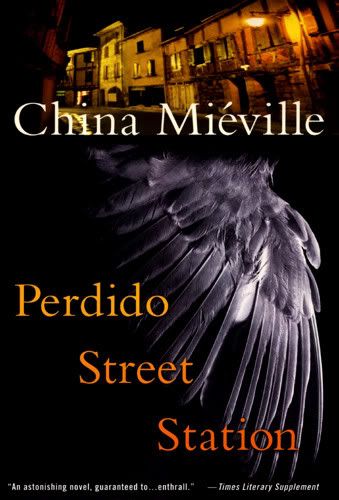
Review: "Perdido Street Station"


This book defies boundaries. In Latin, there is an expression that fits: "sui generis". It means, literally, "its own kind/genus". This truly was a mind-blowing novel for me. It is grim, glorious, grotesque, and grand. It is valid as urban fantasy, science fiction, steampunk and horror. Miéville's prose is astounding; forcing you to slow down as he paradoxically paints a beautiful image of this hellish city of his creation: New Crobuzon. This novel is a love song to cities everywhere. Miéville's prose is one of the greatest strengths of the novel, it is beautifully wrought and the putrid atmosphere of New Crobuzon is palpable. Be warned however, if one is sensitive to horrific imagery or even concepts, step lightly. Some of the scenes are very difficult to expunge from memory. The disaster that falls upon the city cannot be escaped, not even death is a way out.

The novel follows two protagonists: Isaac, an original spin on the mad scientist and Yagharek, a Garuda (a bird-man, essentially). We see the story alternatively between their eyes, though it could be argued that Yagharek is the primary character since his viewpoint is much more personal (being told via first person) as well as lyrical. His journey is a sad parody of an epic, and at the end of the novel comes back to him, to explore the problem of identity. Yagharek seeks out Isaac in the squalid, bloated city of New Crobuzon, which lies beneath the towering bleached ribs of a dead, ancient beast and his home to a multitude of races. These include but are not limited to the Cactacae (humanoid cacti), the Remades (reconstructed people with the alteration or addition of body parts, usually coinciding with a crime comitted), and the Vodyanoi (a fat, frog-like people) .

Yagharek was guilty of a great crime among the Garuda; he took someone's choice. His punishment was the loss of his wings and exile from his homeland. Unwilling to accept his punishment, he learns of Isaac, the brilliant rogue scientist. Until Yagharek comes along, Isaac is content to carry out his unique research while indulging in a forbidden relationship with Lin, a very talented khepri artist. The khepri are an humano-insectoid race, the females are human from the head down but crimson in color and have scarab beetles for heads. Lin communicates to Isaac by using sign language with her head-legs or via writing. 

Isaac agrees to take on this project of recreating the power of flight to prove his unified energy theory as it relates to organic and mechanical forms, and purchases any number of creatures that fly. Bugs, birds, you name it. Among these creatures he intends to study is a brilliantly colored grub whose species is unknown to him. What he doesn't know, is that the grub was stolen from a secret government project. One so dangerous, that it is sold off to the most dangerous drug lord of the entire city. This same drug lord hires Lin in her capacity as an artist to sculpt his hideously mutated form in the way of the khepri.

All is well until the grub lives long enough to metamorphose. And when it does, it escapes from Isaac's lab, unleashing a nightmare upon the city that not even the denizens of Hell will go up against. Its escape precipitates a political crisis and initiates an action-packed manhunt for Isaac and his cohorts. We are introduced to a number of vividly imagined beings who inhabit the twilight zone between science and sorcery, including a very real Satan, a world artist spider with the gift of worldplay called the Weaver, and a sentient trash heap computer.
It is so terrifying because it cuts to one of our most primal fears - the utter loss of identity. 

This book, like a nightmare, is hard to forget once awakened.

Friday, January 14, 2011

"In Praise of Reading and Fiction"


All of you know already how important reading is to me. It's such a huge part of me and my life that it is hard to imagine what it would be like without it. Especially, without the genre of fiction. In 2010, Mario Vargas Llosa (a major Latin American writer) won the Nobel Prize for Literature "for his cartography of structures of power and his trenchant images of the individual's resistance, revolt, and defeat". Vargas Llosa gave a moving Nobel Prize lecture entitled "In Praise of Reading & Fiction", which discussed the importance of fiction in his life and to humanity itself. He was able to say about reading fiction what I don't have the eloquence to say. I swear, it's like talking to myself when I read this. Here are a few excerpts I found that especially resonated with me: 

"But thanks to literature, to the consciousness it shapes, the desires and longings it inspires, and our disenchantment with reality when we return from the journey to a beautiful fantasy, civilization is now less cruel than when storytellers began to humanize life with their fables. We would be worse than we are without the good books we have read, more conformist, not as restless, more submissive, and the critical spirit, the engine of progress, would not even exist. Like writing, reading is a protest against the insufficiencies of life. When we look in fiction for what is missing in life, we are saying, with no need to say it or even to know it, that life as it is does not satisfy our thirst for the absolute – the foundation of the human condition – and should be better. We invent fictions in order to live somehow the many lives we would like to lead when we barely have one at our disposal." 

Vargas also had a troublesome childhood, and how reading and writing became his comfort. Is it any real surprise that I also found an escape in science fiction and fantasy?
"I lost my innocence and discovered loneliness, authority, adult life, and fear. My salvation was reading, reading good books, taking refuge in those worlds where life was glorious, intense, one adventure after another, where I could feel free and be happy again. And it was writing, in secret, like someone giving himself up to an unspeakable vice, a forbidden passion. Literature stopped being a game. It became a way of resisting adversity, protesting, rebelling, escaping the intolerable, my reason for living. From then until now, in every circumstance when I have felt disheartened or beaten down, on the edge of despair, giving myself body and soul to my work as a storyteller has been the light at the end of the tunnel, the plank that carries the shipwrecked man to shore. "

Here, he talks about how fiction can transform us:

"From the cave to the skyscraper, from the club to weapons of mass destruction, from the tautological life of the tribe to the era of globalization, the fictions of literature have multiplied human experiences, preventing us from succumbing to lethargy, self-absorption, resignation. Nothing has sown so much disquiet, so disturbed our imagination and our desires as the life of lies we add, thanks to literature, to the one we have, so we can be protagonists in the great adventures, the great passions real life will never give us. The lies of literature become truths through us, the readers transformed, infected with longings and, through the fault of fiction, permanently questioning a mediocre reality. Sorcery, when literature offers us the hope of having what we do not have, being what we are not, acceding to that impossible existence where like pagan gods we feel mortal and eternal at the same time, that introduces into our spirits non-conformity and rebellion, which are behind all the heroic deeds that have contributed to the reduction of violence in human relationships. Reducing violence, not ending it. Because ours will always be, fortunately, an unfinished story. That is why we have to continue dreaming, reading, and writing, the most effective way we have found to alleviate our mortal condition, to defeat the corrosion of time, and to transform the impossible into possibility."


The entire lecture can be read here. It is well worth the time.

Tuesday, December 14, 2010

Review: The Historian


"The Historian" is Elizabeth Kostovoa's 2005 debut novel. It beautifully blends multiple genres, including detective fiction, historical thriller, travelogue, Gothic novel, postmodern historical fiction. It is not a horror novel. It is more eerie and creepy; there is no gratuitous amounts of gore or shock factor. Besides being a great mystery, Kostova uses Dracula as a metaphor for the evil in history, especially the evils of religious conflict, and delves into the relationship between the Christian West and Islamic East. She does a great job at blending the history and folklore of Vlad Ţepeş, a 15th century prince of Wachallia (a.k.a Vlad the Impaler) and his fictional counterpart, Count Dracula. She does this with the story of Paul, a professor; his 16-year-old daughter; and their quest for Vlad's tomb. The novel ties together three separate narratives using letters and oral accounts: that of Paul's mentor in the 1930s, that of Paul in the 1950s, and that of the narrator herself in the 1970s. The tale is told primarily from the perspective of Paul's daughter, who is never named. It is a refreshing, more realistic take on the classic tale of Dracula.

The story opens in Amsterdam in 1972, when Paul's daughter discovers a medieval book and a cache of yellowed letters in her diplomat father’s library. The pages of the book are empty except for a woodcut of a dragon. The letters are addressed to: “My dear and unfortunate successor.” When the girl confronts her father, he reluctantly confesses an unsettling story: his involvement, twenty years earlier, in a search for his graduate school mentor, who disappeared from his office only moments after confiding to Paul his certainty that Dracula–Vlad the Impaler, an inventively cruel ruler of Wallachia in the mid-15th century–was still alive. The story turns out to concern our narrator directly because Paul’s collaborator in the search was a fellow student named Helen Rossi (the unacknowledged daughter of his mentor) and our narrator’s long-dead mother, about whom she knows almost nothing. And then her father, leaving just a note, disappears also.

Over the course of the novel, the characters visit England, France, Turkey, Hungary and Romania during the search for Vlad's tomb. I believe that one of the biggest strengths of the novel is Kostova's beautiful imagery to bring all of these places to life. She really draws you in and gives you a sense of these incredible places. I have been to Turkey myself, and the awe and wonder I felt at this incredible city only increased with Kostova's descriptions. This novel also caters to my bibliophilic nature. I love books (especially old ones), and the main characters of this novel are all historians. In fact, it is revealed that Dracula himself is a bibliophile! So, we spend a lot of time in dusty, old, magnificent libraries and monasteries. If history bores you, this is not a novel for you. Kostova spent ten years researching for this novel and it shows. You will come away knowing a lot more about medieval history than you expect. I love that about it, but it can certainly bog down some parts of the novel. I think that she could have cut out a good portion of the history and still leave us with what we need to know plus some extra.This is not one of those "light" reads that you sit down and read a few pages, and then come back and read more later. I think it is best enjoyed when you can really sit down with it, with no distractions, and give yourself over to it.

Her characters are deep and have a great amount of emotional depth with possibly the exception of the 16 year old narrator. She comes off as slightly cold, perhaps because of her upbringing without a mother. Since this isn't really her story (it is more about Paul and his mentor, Bartholomew Rossi) I let this go as only a minor complaint. However, her father Paul, Helen, and the ensemble of supporting characters are all very well done and intriguing. My only real complaint is the ending, it seemed a bit weak and anticlimactic. Overall, it was a satisfying read; eerie, suspenseful, and intriguing. Dan Brown could learn a thing or two from Ms. Kostova.

Wednesday, December 1, 2010

TV News: Winter is coming....

And I can't wait for it! HBO has been turning the dark fantasy epic "Game of Thrones" by George R. R. Martin into a series. This latest (third) trailer has given us a much bigger glimpse into what the show will be like. It is appropriately dirty and grim. Fantasy isn't always bright and cheerful.


Sunday, September 12, 2010

Le Petit Prince


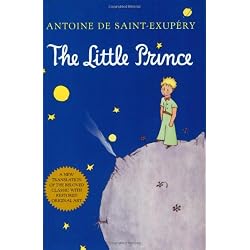
If I ever have children, this is going to be one of the first things that I make them read (after Goodnight Moon, Grandfather Time, The Polar Express, etc.). Yeah, that's right MAKE them read! And they'll like it! But I digress. This book, though written for children, could certainly be read by adults and come away with a profound experience. I read this for the second time for my elementary school's gifted program, and its core message of love, warning against narrowmindedness and other lessons have stuck with me. This book should be read by children everywhere. "The Little Prince" was written by Antoine de Saint-Exupéry, a French aviator. In the book, the narrator (a pilot) crashes into a desert and is stranded. Saint-Exupéry had a similar experience, crashing into the Sahara which he wrote about in his memoir "Wind, Sand and Stars".


The beginning describes the meeting between the pilot and the Little Prince. Afterwards, the Little Prince's home asteroid B612 is introduced. He spends his time tending his asteroid that contains three volcanoes and a rose amongst other things. The Little Prince loves the single rose on his planet but she cannot love him back because of her own shortcomings. The Little Prince eventually leaves his home asteroid and sets off to explore the universe. On each new asteroid he meets a new adult who is ridiculous and foolish in their own way. Among them are:


The King

The Conceited Man

The Drunkard

The Businessman

The Lamplighter

The Geographer


The last asteroid he comes to is Earth, where he meets a snake in the desert who offers to get the Prince back to his home planet. While he is in the desert he comes upon a multitude of rosebushes. This makes him sad, as he thought his rose was the only one in the whole universe. His thoughts turn dour, and he begins to think perhaps he is not a great prince after all since he only has three volcanoes and a now-common rose for his kingdom.


The most touching and memorable part of the book is in Chapter 21 after the Prince has met the desert fox, and he is leaving the desert. This is the heart of the book. Throughout his travels the Prince has learned many lessons, and he knows the truths that fox has spoken to him, but with the fox's words the prince's future is made clear to him.


"Voici mon secret. Il est très simple: On ne voit bien qu'avec le cœur. L'essentiel est invisible pour les yeux....C'est le temps que tu as perdu pour ta rose qui fait ta rose si importante. Les hommes ont oublié cette vérité, dit le renard. Mais tu ne dois pas l’oublier. Tu deviens responsable pour toujours de ce que tu as apprivoisé."


Translation: "Here is my secret. It's quite simple: one sees clearly only with the heart. The essential is invisible to the eyes. It is the time you have lost for your rose that makes your rose so important. People have forgotten this truth, but you mustn’t forget it. You become responsible for what you’ve tamed. You’re responsible for your rose. . ."


The fox explains that the Prince's rose is unique and special, because she is the one whom he loves. He also explains that in a way he has tamed the flower, as she has tamed him, and that this is why he now feels responsible for her. Also, the fact that the fox calls it a secret is important. This knowledge is not available to all, and is in fact, a privilege. The lessons can only be learned through experience.